
When purchasing commercial equipment, price is often the first factor buyers compare. When two products offer similar functions at different prices, the lower-priced option naturally attracts more attention.However, for commercial faucets, drinking water equipment, and other products designed for long-term use, the purchase price is only part of the total cost.The real cost of a product also includes maintenance, repairs, replacement parts, labor, and other expenses that arise during its service life. Focusing only on the initial purchase price can sometimes lead to higher costs later on.That is why the true value of a commercial product should be evaluated based on its total cost of ownership over its entire lifecycle, rather than its purchase price alone.
In commercial environments, the value of a product is determined not only by its price but also by how reliably it performs over time and whether it can improve workplace efficiency.Take a commercial pre-rinse faucet as an example. Although a faucet may seem like just another kitchen fixture, it can be operated hundreds of times a day in a busy commercial kitchen, including repeated opening, closing, pulling, and rinsing.If the faucet has a well-designed structure, intuitive operation, and stable water control, employees can complete cleaning tasks more efficiently.Saving just a few seconds per operation may seem insignificant. But in a busy commercial kitchen or restaurant, those small time savings can add up over months and years, reducing labor requirements and improving overall efficiency.Durability is equally important.Commercial faucets are typically expected to remain in service for years. If a faucet repeatedly develops leaks, becomes loose, or experiences cartridge failures, maintenance becomes a recurring expense. In some cases, the entire faucet may eventually need to be replaced.Professional repair services can also be costly, particularly in markets such as the United States and Europe.If an inexpensive faucet requires repeated repairs, its cumulative maintenance cost may eventually approach—or even exceed—the cost of purchasing a higher-quality product in the first place.
So the more important question is not:
“How much cheaper is Product A than Product B?”
It is:
“Which product will cost less to own over its entire service life?”
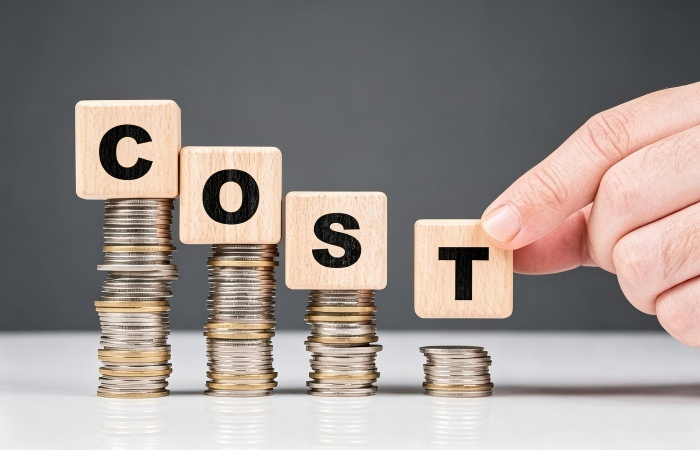
A mature commercial product is not simply raw material that has been processed and assembled.Investment begins long before the finished product reaches the market.Manufacturers first need to understand market demand, identify problems users encounter in real-world applications, and monitor industry trends. This early research helps determine what the product should actually solve.The design stage then involves repeated adjustments to the product's structure, dimensions, operating method, and overall user experience.For commercial faucets, good design is not simply about appearance. It also needs to consider ergonomics, frequent operation, ease of installation, and long-term reliability.As a result, even a product that appears relatively simple may require contributions from multiple teams.Engineers develop technical solutions, designers refine the product structure and user experience, while production teams determine whether the design can be manufactured consistently at scale.All of this requires time, expertise, equipment, and investment.

Competitive commercial products typically require extensive testing and validation before they are ready for production.R&D teams study competing products, analyze user feedback, identify weaknesses, and continuously test potential improvements.A single structural design may need to be modified several times. Individual components may also require repeated testing before the final specifications are confirmed.These activities create real development costs, including engineering labor, testing equipment, prototypes, sample production, and performance validation.For commercial faucets, meaningful R&D is not about making a product unnecessarily complicated. Its purpose is to solve real problems and make the product more reliable, durable, and easier to use.Therefore, the final price of a well-developed product reflects not only its physical materials, but also the considerable time, expertise, and investment required to develop it.

Materials are another major component of product cost.Take a stainless steel commercial faucet as an example. High-quality stainless steel offers good corrosion resistance and durability, but it is also more challenging to machine than many traditional materials.Compared with brass, stainless steel is harder and places greater demands on machining equipment, manufacturing processes, and technical expertise.As a result, every stage—from material sourcing and machining to polishing, assembly, and final inspection—can affect both product quality and manufacturing cost.When a manufacturer invests more in materials, equipment, production processes, and quality control, the initial cost of the product may naturally be higher.
But those investments can ultimately contribute to greater reliability and a longer service life.So when a product costs more, the right question is not simply:
“Why is it more expensive?”
It is also:
“What am I getting in return for that additional cost?”

One of the easiest things to overlook when buying a low-priced product is what happens after the purchase.For example, if a low-cost commercial faucet frequently develops leaks, each repair adds to the total cost.If repairs do not solve the problem, components—or even the entire faucet—may need to be replaced.A product failure can also affect normal kitchen operations if the faucet is temporarily unavailable.And repairs cost more than money.Employees may need to contact customer service, wait for replacement parts, coordinate with technicians, or temporarily stop certain tasks while the problem is being resolved.These costs rarely appear on the original purchase quotation, but they are still real operating expenses.In other words, the cost of a low-priced product does not necessarily disappear.It may simply shift from the purchasing stage to the operating stage.

If you compare purchase prices alone, a low-cost product will often appear more attractive.
No. | Cost Factor | Lower-Cost Product | Higher-Quality Product |
1 | Initial purchase price | Lower | May be higher |
2 | Service life | Often shorter | Longer |
3 | Risk of failure | Potentially higher | Lower |
4 | Maintenance frequency | Potentially higher | Lower |
5 | Replacement costs | More frequent | Less frequent |
6 | Labor and downtime | More likely to increase | Generally lower |
7 | Overall lifecycle cost | May be higher | More predictable |
But once you consider installation, maintenance, repairs, replacement, labor, and potential downtime, the overall picture can be very different.This is why “expensive” and “cheap” should not be judged by the purchase price alone.The more meaningful question is:How much will the product actually cost throughout its entire service life?
For commercial equipment designed for long-term use, the lowest purchase price does not necessarily mean the lowest overall cost.A truly valuable product needs to strike a balance between durability, operating efficiency, reliability, functionality, and maintenance costs.Bestware places strong emphasis on product quality and long-term value. Through material selection, product development, manufacturing processes, and quality control, Bestware continues to improve the overall performance of its commercial faucets.At the same time, high quality should not automatically mean an unnecessarily high price. Bestware continuously improves production efficiency and manufacturing management to control costs while maintaining product quality, enabling us to offer customers more competitive commercial faucet solutions.When purchasing commercial equipment, it is worth looking beyond “How much does it cost to buy?” and asking:“How much will it cost to use?”Because real savings do not come from choosing the cheapest product.They come from reducing unnecessary costs throughout the entire service life of the product.