
Stainless steel is by no means an unfamiliar material in the commercial faucet market. However, relatively few manufacturers have adopted stainless steel for long-term, large-scale production. The reasons become clearer when the issue is examined from a manufacturing perspective. For faucet manufacturers, switching from brass to SUS304 or SUS316 is not simply a matter of replacing one raw material with another. A change in material also affects machining equipment, tooling, production parameters, and the experience required from production personnel, ultimately creating a different set of manufacturing requirements.
Brass has been widely used in faucet manufacturing for many years, largely because of its established machining processes. Through years of production, manufacturers have accumulated stable equipment configurations and machining experience, allowing them to develop relatively efficient production processes around brass.
Stainless steel is different. Because SUS304 and SUS316 have relatively high hardness and strength, machining them requires greater cutting forces and can also increase tool wear.
This means that machining experience developed around brass cannot simply be transferred to stainless steel production in its entirety. Manufacturers need to address new requirements related to tooling, machining parameters, cooling, and machining accuracy.
The challenges of stainless steel machining can be understood through several key areas.
Machining stainless steel places greater demands on tool hardness, wear resistance, and heat resistance. Selecting an unsuitable tool material can directly affect machining stability and tool life.
Cutting speed, feed rate, and depth of cut all need to be optimized according to the characteristics of stainless steel. Improper parameters can affect production efficiency, tool life, and machining quality.
The heat generated during machining needs to be effectively controlled. Appropriate cooling conditions can help reduce thermal deformation and minimize the effects of heat on the tooling.
The geometry and angles of cutting tools also need to be adjusted according to the machining characteristics of stainless steel to achieve more suitable cutting performance.
The final dimensional and geometric accuracy of the components also depends on machine tool accuracy and the overall control of the machining process.
Together, these factors form an important part of the technical requirements for stainless steel machining. Therefore, even a manufacturer with extensive experience in faucet production cannot necessarily establish a stable stainless steel manufacturing system immediately.
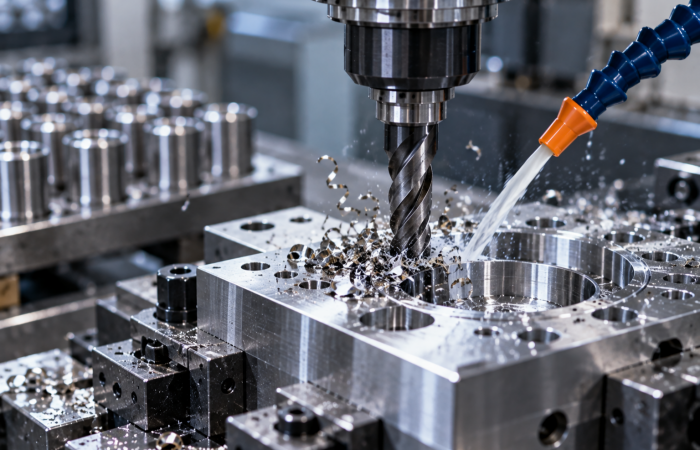
For large faucet manufacturers, there is another factor that is easy to overlook: existing production assets. If a company has invested heavily in equipment and resources for brass production over many years, those investments have become an integral part of its manufacturing system. If the company then decides to make a large-scale transition to stainless steel, it needs to reconsider equipment upgrades, production line adjustments, and process validation. At the same time, introducing new processes may require employee training and can lead to changes in production efficiency and product consistency. A change in manufacturing technology therefore comes with a cost. Manufacturers need to find a balance between their established production systems and a new material direction. This is one reason why many established companies do not readily abandon their existing material and manufacturing processes.
Material innovation is also related to company size. Larger companies generally have more extensive and established production systems. At the same time, the larger and more complex the system becomes, the more costly it can be to make significant changes to it. Smaller companies with more focused operations may have greater flexibility when adjusting equipment and production processes.
Bestware is one example. Bestware is a company focused on commercial stainless steel faucets. In 2013, the company began adopting stainless steel as its material route for commercial faucets and has continued to develop around this direction. For Bestware, stainless steel was not simply a material substituted within an established brass manufacturing system. It involved gradually building the necessary capabilities across materials, processes, and production equipment.
From an industry perspective, the long-standing dominance of brass cannot simply be attributed to stainless steel being an inferior material. Brass has a mature supply chain, established machining methods, and a well-developed industrial foundation. Stainless steel production, meanwhile, requires manufacturers to develop a different set of manufacturing capabilities. The shift in materials within the commercial faucet industry is therefore also a shift in manufacturing technology.
As machining processes continue to develop and manufacturers accumulate more experience in stainless steel production, stainless steel still has room to expand its application in the commercial faucet industry. For faucet manufacturers, the more important question is not simply which material is inherently easier to manufacture. It is whether they are prepared to invest sufficient technology, equipment, and experience to build a manufacturing system suited to the material they choose. That is where the manufacturing challenge of stainless steel commercial faucets lies.