
Every day, we turn on faucets to wash our hands, rinse vegetables, and access drinking water. Most people pay attention to whether their water supply is safe or whether a filter needs replacing, but few consider another equally important question: What material is the faucet itself made of?A faucet is more than just a device for controlling water flow. It is also one of the final components that comes into direct contact with water before it reaches the user. If the materials used in a faucet contain lead or other elements of concern, certain conditions may cause these substances to leach into the water and affect its quality.For faucets used in drinking water applications, material selection is therefore about more than appearance and service life. It is also closely related to water safety.
Brass has traditionally been a widely used material in the faucet industry. It offers good machinability and makes it easier to manufacture complex valve bodies and internal components.However, brass is not composed solely of copper and zinc. Depending on the specific alloy, it may also contain lead, iron, aluminum, tin, manganese, silicon, nickel, and other elements. In some traditional brass alloys, lead has been added to improve machinability.This raises an often-overlooked concern: if certain faucet components contain lead, prolonged contact with water may, under specific conditions, allow lead to leach into the water.Lead leaching is not determined simply by whether a material contains lead. Water quality, temperature, contact time, material composition, and corrosion conditions can all affect the process.That is why faucet safety should not be judged by appearance alone. It is equally important to consider the materials that come into direct contact with water.
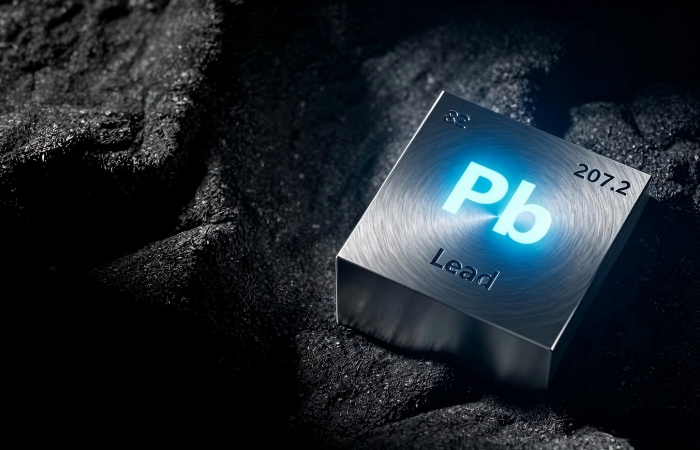
These two concepts are often confused.The presence of lead in a material does not necessarily mean that large amounts of lead will enter the water. What matters is whether lead can migrate from the material into the water through corrosion, dissolution, or other processes during actual use.This means that a faucet's safety cannot be determined simply by looking at its appearance. Even if a faucet has:
· A polished surface
· High-quality workmanship
· Clear water flow
· Normal operating performance
None of these factors alone can determine its performance in terms of metal leaching.For drinking water applications, the more important questions are:
· What materials come into direct contact with the water?
· What properties do those materials have?
· Does the product meet the applicable drinking water safety requirements of its target market?

Faucets come into contact with water every day. The materials exposed to water therefore form an important interface within the water delivery system.If unsuitable materials are used, new material-related risks may arise even when the water source itself meets quality requirements.By contrast, selecting appropriate materials during the product design stage can help address potential risks at the source.This is why consumers should not compare faucets based solely on price, appearance, or functionality. Material selection should also be an important consideration.

For faucets that come into direct contact with water, Bestware uses SUS304 stainless steel as its primary material unless otherwise specified by the customer.The choice of SUS304 stainless steel is not simply about making a product look stronger or more durable. More importantly, it reflects a product design philosophy that starts with material selection.Unlike some traditional lead-containing brass alloys, SUS304 stainless steel itself contains no lead. It also offers excellent corrosion resistance and mechanical strength.These characteristics are particularly important for faucets that remain in long-term contact with water and are subjected to frequent use.
Bestware uses SUS304 stainless steel as its primary material. SUS304 stainless steel itself contains no lead.Compared with some traditional lead-containing brass alloys, choosing SUS304 stainless steel eliminates concerns associated with lead as a material component from the outset.For drinking water-related products that remain in long-term contact with water, selecting a lead-free material provides an important foundation for safer material design.
Faucets are exposed to water continuously throughout their service life. In commercial environments, they may also come into contact with cleaning agents, salts, and varying water conditions.SUS304 stainless steel offers excellent corrosion resistance, helping the product maintain stable performance over extended periods of use.
In commercial environments, faucets are often subjected to frequent operation and continuous use.SUS304 stainless steel provides good strength and durability, making it well suited for high-frequency applications.
For commercial kitchens, public facilities, and other demanding environments, durable materials can also help reduce replacement frequency and long-term maintenance costs.
In addition to its long service life, stainless steel has excellent recycling value.At the end of a product's service life, stainless steel can be recycled and reused. This means that material selection affects not only the product's current performance but also its overall lifecycle and sustainability.
When comparing faucets made from different materials and offered at different price points, the following factors are worth considering:
No. | What to Consider | Why It Matters |
1 | Materials in contact with water | Directly affects how the material performs during long-term contact with water |
2 | Whether the material contains lead | Lead-free materials avoid concerns associated with lead as a material component |
3 | Corrosion resistance | Affects long-term stability and durability |
4 | Mechanical strength | Determines whether the product can withstand frequent use |
5 | Product testing and certification | Helps demonstrate compliance with relevant market requirements |
6 | Recyclability | Relates to the product's sustainability throughout its lifecycle |
Price and appearance may determine whether a faucet initially attracts attention, but the material determines whether it can withstand long-term use.
In the past, people choosing a faucet were often primarily concerned with whether the water flowed smoothly, whether the handle operated easily, and whether the product looked attractive.Today, as awareness of drinking water safety and sustainability continues to grow, the standards used to evaluate faucets should evolve as well.A good faucet should not only be:
· Functional
· Durable
· Reliable
It should also give greater consideration to:
· Whether the materials in contact with water are appropriate for the application
Bestware's use of SUS304 stainless steel reflects this approach. By starting with material selection, we aim to meet the demands of frequent use while providing customers with a more reliable product choice.
A faucet may appear to be a simple water outlet, but it is actually an important point of contact between water and the end user.Water quality is influenced not only by the water itself but also by the materials it comes into contact with.Lead leaching is not something that can be identified visually. Instead of focusing only on a faucet's appearance and price, it is worth taking a closer look at its materials, manufacturing processes, testing, and certifications.Bestware uses SUS304 stainless steel across its product range unless otherwise specified by the customer. SUS304 stainless steel is naturally lead-free while also offering excellent corrosion resistance, durability, and recycling value.Choosing the right faucet starts with choosing the right material—and that may be one of the most overlooked factors worth paying attention to.