
Commercial kitchens depend on water all day. Pre-rinse Spray Valves, faucets and dishwashing equipment may be opened and closed hundreds of times during a single shift.
Most operators pay attention to water pressure, cleaning power and equipment durability. However, one plumbing issue is often overlooked: water hammer.
That sudden bang, knock or vibration heard after a spray valve or faucet closes may not simply be normal pipe noise. It can be a sign of a pressure shock moving through the water system.
Understanding water hammer can help restaurant owners, hotel managers, kitchen operators and equipment buyers choose more suitable products and reduce unnecessary stress on their plumbing systems.
Water hammer is a sudden pressure surge caused by a rapid change in water flow.
Imagine a fully loaded truck travelling at speed. If a solid barrier suddenly appears in front of it, the truck cannot stop instantly. The momentum of the vehicle and its cargo produces a powerful impact.
Water moving through a pipe behaves in a similar way. When water is flowing at speed and a valve closes suddenly, the moving water cannot stop immediately. Its momentum creates a pressure wave that travels backward through the pipeline.
This pressure wave may cause:
· A loud banging or knocking sound
· Vibration in pipes or hoses
· Movement at joints and fittings
· A noticeable impact when operating the valve
The faster the water is moving and the more suddenly it is stopped, the stronger the pressure shock may be.
Water hammer can occur in many plumbing systems, but commercial kitchens often create conditions that make it more noticeable.
A commercial spray valve is used differently from a residential faucet. It may be opened and closed repeatedly throughout the day while employees rinse plates, cookware, trays, utensils and food-preparation equipment.
Several factors can increase the likelihood or severity of water hammer:
High-frequency operation
In a busy kitchen, spray valves may be activated hundreds or even thousands of times per day. Even a relatively small pressure shock can become more significant when it is repeated continuously.
Fast-closing valves
A valve that shuts off very quickly can interrupt the water flow almost instantly, creating a sharper pressure wave.
High water pressure
Higher pressure and faster water velocity can increase the force created when the flow suddenly stops.
Long or rigid pipework
Long pipe runs and rigid plumbing connections may transmit pressure waves and vibration more noticeably.
Poorly secured pipelines
If pipes are not properly supported, a pressure wave may cause them to move and strike walls, brackets or surrounding equipment.
The banging sound is usually the most obvious symptom, but water hammer is not only about noise.
Repeated pressure shocks may gradually place additional stress on different parts of the plumbing system, including:
· Valve components
· Seals and gaskets
· Hose connections
· Pipe joints
· Fittings and mounting points
· Nearby water-using equipment
A single mild pressure shock may not cause immediate damage. However, repeated impacts over a long period can contribute to loose connections, premature wear and leakage.
For a commercial kitchen, these issues can mean more maintenance work, equipment downtime and interruption to normal cleaning operations.
This is why water hammer should be considered during both product selection and plumbing design.
A hydraulic cushioning structure is designed to make valve operation smoother and reduce the severity of the sudden pressure change.
Instead of allowing the flow to stop with a sharp mechanical impact, the cushioning structure helps soften the closing action and absorb part of the hydraulic shock.
In a commercial spray valve, this can provide several practical benefits:
Smoother operation
The spray valve feels less abrupt during repeated opening and closing.
Reduced pressure shock
A softer closing action can help reduce the intensity of the pressure wave entering the pipeline.
Less vibration and noise
Reducing the pressure impact may also help minimize pipe movement, knocking and vibration.
Lower stress on the plumbing system
Smoother valve operation can reduce repeated impact on valves, joints, hoses and other connected components.
Improved user comfort
For employees who operate a spray valve throughout an entire shift, smoother control can make the cleaning process feel more comfortable and less tiring.
Hydraulic cushioning helps reduce water hammer. Its actual effectiveness is also influenced by water pressure, pipe layout, valve-closing speed, pipe support and the overall design of the plumbing system.
Selecting a spray valve with hydraulic cushioning is one useful step, but water hammer should be addressed as a complete system issue.
Commercial kitchens can also consider the following measures:
· Check whether the incoming water pressure is excessively high
· Use an appropriate pressure-reducing valve where necessary
· Secure pipes properly to reduce movement
· Avoid unnecessarily long or poorly arranged pipe runs
· Inspect loose fittings and worn valve components
· Install water hammer arrestors where required
· Choose valves designed for frequent commercial operation
When water hammer is severe or persistent, the plumbing system should be inspected by a qualified professional.
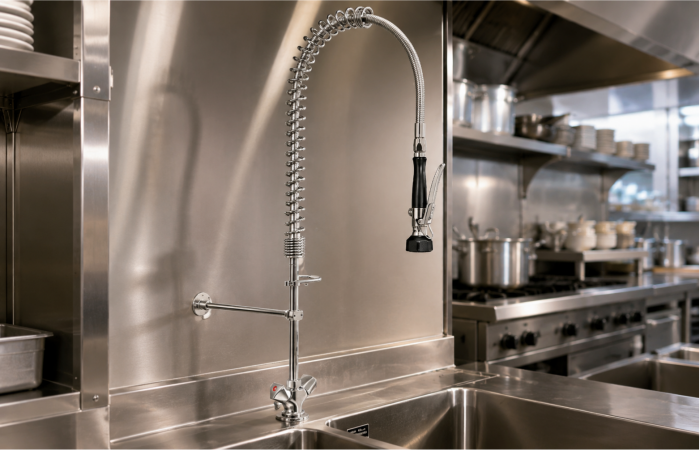
Bestware’s patented dual-function stainless steel spray valve is designed for intensive commercial use.
In addition to powerful washing and wide-area rinsing modes, the spray valve incorporates an ergonomic hydraulic cushioning structure. This design helps provide smoother operation, reduce muscle strain and minimize pressure shock during frequent use.
The spray valve also features 24 precision outlets for broad and even water coverage. Its food-grade SUS304 stainless steel construction provides lead-free safety, corrosion resistance and durability for demanding commercial kitchen environments.
For restaurant owners, hotel operators and kitchen managers, a commercial spray valve should do more than deliver strong water flow. It should also support comfortable operation, reliable performance and a more stable plumbing system.
Water hammer is the pressure shock created when moving water is stopped too quickly. In a commercial kitchen, frequent valve operation, high water pressure and demanding cleaning routines can make this problem more noticeable.
Although it may begin as a simple banging sound, repeated water hammer can place additional stress on pipes, joints, hoses and valve components.
A hydraulic cushioning structure helps soften valve closure, reduce pressure shock and provide smoother operation. Combined with appropriate water-pressure control and proper plumbing installation, it can contribute to a quieter, more reliable and more comfortable commercial cleaning system.