
In restaurants, hotels, central kitchens, and food processing facilities, commercial Manual Faucets are an essential part of daily cleaning operations.Unlike residential kitchens, commercial kitchens place far greater demands on faucets. They are subjected to continuous operation throughout the day, frequent on/off cycles, constant exposure to water, and regular contact with cleaning chemicals. As a result, the material of a faucet affects much more than its appearance—it plays a critical role in durability, maintenance requirements, and long-term operational reliability.Today, the two most common materials used in commercial manual faucets are stainless steel and brass. But how do these materials perform in demanding commercial environments? And why are more commercial kitchens choosing stainless steel over traditional brass?
Commercial kitchens demand equipment that can withstand intensive daily use while maintaining consistent performance over the long term.
A commercial manual faucet may be operated hundreds of times each day while remaining in a humid environment and being repeatedly exposed to cleaning agents, limescale, grease, and other contaminants. To perform reliably under these conditions, a faucet should offer the following characteristics:
No. | Requirement | Why It Matters |
1 | High Durability | Withstands frequent operation without compromising performance |
2 | Corrosion Resistance | Resists moisture and minimizes the risk of material deterioration |
3 | Easy Cleaning | Smooth surfaces help reduce dirt buildup and simplify daily sanitation |
4 | Low Maintenance | Reduces servicing frequency and lowers long-term operating costs |
For commercial kitchens, selecting a manual faucet should involve more than comparing purchase price or appearance. The material, internal components, and expected maintenance costs all contribute to the faucet's long-term value and reliability.
Both stainless steel and brass are widely used in faucet manufacturing. However, when subjected to the demanding conditions of commercial kitchens, the two materials can perform quite differently over time.
No. | Comparison | Stainless Steel Manual Faucets | Brass Manual Faucets |
1 | Strength & Durability | Stainless steel offers excellent structural strength and rigidity, making it highly resistant to deformation under frequent daily use | Brass is easier to machine but is relatively softer. Under prolonged heavy use or repeated impacts, maintaining long-term structural stability becomes increasingly important |
2 | Corrosion Resistance | Stainless steel provides inherent corrosion resistance without relying on additional surface treatments, helping maintain its appearance and performance over time | Brass faucets typically rely on an electroplated finish for corrosion protection. Prolonged exposure to moisture, cleaning chemicals, and daily wear may eventually affect the finish, resulting in discoloration or surface wear |
3 | Valve Cartridge Durability | Stainless steel construction offers excellent wear resistance and long-term stability, helping reduce maintenance requirements in high-use commercial environments | Once the electroplated finish begins to wear, additional cleaning and maintenance may be required to preserve the faucet's appearance |
4 | Cleaning & Maintenance | Stainless steel surfaces are easy to clean and maintain, helping reduce maintenance efforts in busy commercial kitchens | Once the electroplated finish begins to wear, additional cleaning and maintenance may be required to preserve the faucet's appearance |
5 | Lead-Free Compliance | Stainless steel contains no intentionally added lead and is naturally aligned with the industry's growing demand for lead-free drinking water products | Some brass alloys may contain lead to improve machinability. Compliance with lead-free regulations depends on the specific alloy composition and certified testing results |
From a long-term commercial perspective, stainless steel relies on the inherent properties of the material itself to deliver lasting performance, while brass depends more heavily on its protective surface finish to maintain both appearance and corrosion resistance.For commercial kitchens where durability, hygiene, and low maintenance are top priorities, this distinction becomes increasingly significant over the product's service life.
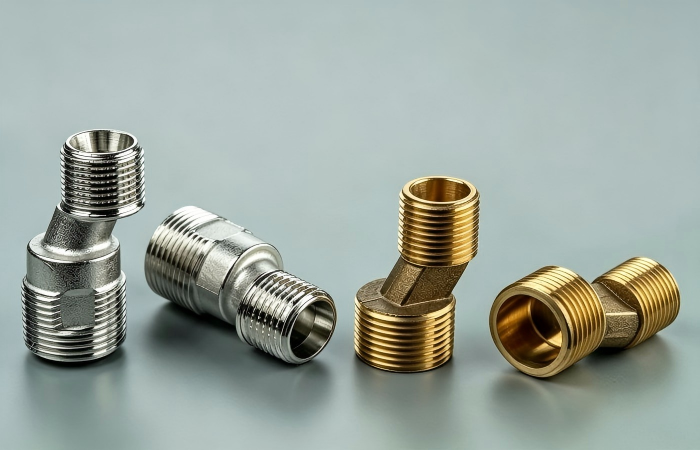
Selecting the right material is only part of the equation. In commercial kitchens, where faucets are used continuously throughout the day, long-term reliability depends on how well the material and internal components perform under demanding conditions.For many commercial applications, stainless steel offers several practical advantages.
① Inherent Corrosion Resistance for Long-Term Reliability
Commercial kitchens are high-moisture environments where faucets remain in constant contact with water, steam, detergents, and cleaning chemicals.Many brass faucets rely on an electroplated finish to protect the underlying material. Over time, repeated cleaning, daily wear, and continuous exposure to moisture can gradually affect the finish, potentially impacting both appearance and long-term durability.By comparison, stainless steel provides corrosion resistance through the material itself, rather than through an additional surface coating. This intrinsic protection makes it well suited for commercial environments where long-term exposure to water is unavoidable.
② Durable Valve Cartridge Design for High-Frequency Operation
While the faucet body is important, the valve cartridge is one of the most critical components affecting overall service life.In busy commercial kitchens, faucets may be operated hundreds of times each day. The valve cartridge must withstand continuous mechanical movement while maintaining smooth operation and reliable sealing.Compared with conventional brass valve cartridges, stainless steel valve cartridges generally offer greater wear resistance and structural stability, helping reduce common issues such as dripping, incomplete shutoff, or reduced operating smoothness after extended use.For facilities that depend on uninterrupted kitchen operations, improved valve cartridge durability can contribute to lower maintenance requirements and greater operational reliability.
③ No Electroplated Finish to Wear Away
Commercial faucets are routinely exposed to water, limescale, detergents, grease, and frequent cleaning.For electroplated brass faucets, years of use may gradually lead to:
·Surface wear
·Discoloration
·Peeling or deterioration of the plated finish
·Increased maintenance to preserve appearance
Because stainless steel does not rely on an electroplated finish, it eliminates concerns associated with coating wear. This helps reduce maintenance efforts while maintaining a clean, professional appearance throughout the product's service life.
④ Easy to Clean and Well Suited for Hygienic Environments
Maintaining cleanliness is a top priority in restaurants, hotels, central kitchens, and food processing facilities.The smooth, non-porous surface of stainless steel makes it easier to remove grease, water spots, and everyday residue during routine cleaning. With regular maintenance, it can continue to deliver a clean appearance and consistent performance over years of commercial use.For operations with strict hygiene standards, easy-to-maintain equipment can also help improve cleaning efficiency.
⑤ Balanced Performance for Long-Term Commercial Use
The durability of a commercial manual faucet depends on more than the body material alone.Long-term performance is influenced by the combination of:
·Body material
·Valve cartridge quality
·Sealing system
·Structural design
·Manufacturing quality
When these elements work together, the result is a faucet capable of delivering reliable performance throughout years of demanding commercial service.
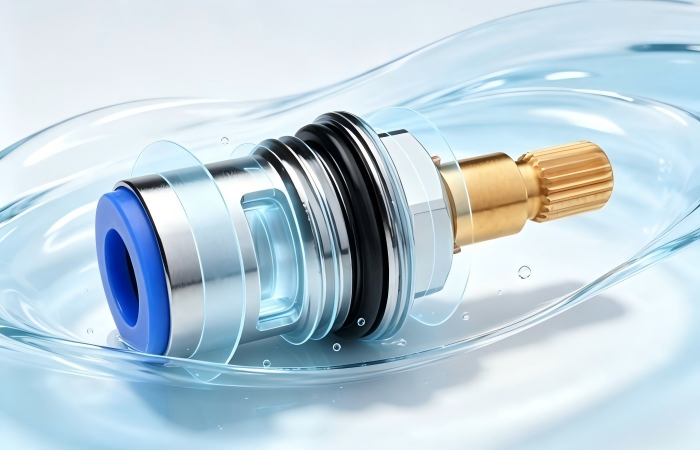
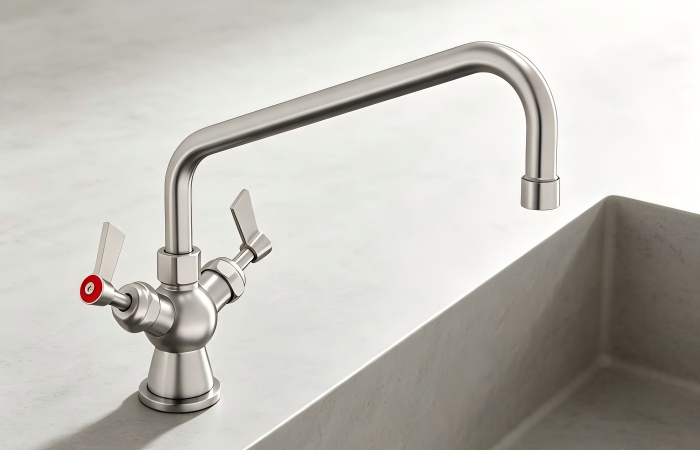
Commercial kitchens require faucets that deliver consistent performance day after day while meeting high standards for durability, hygiene, and ease of maintenance.Designed specifically for these demanding environments, Bestware Commercial Manual Faucets combine stainless steel construction with dependable engineering to provide a reliable water delivery solution for restaurants, hotels, central kitchens, and food processing facilities.
① Stainless Steel Construction for Long-Term Durability
Bestware Commercial Manual Faucets are manufactured from stainless steel without the use of an electroplated surface finish.Instead of relying on an external coating for protection, the faucets benefit from the material's inherent corrosion resistance, helping maintain their appearance and performance even in continuously wet commercial environments.This design also minimizes maintenance associated with aging or damaged surface finishes, making the faucets well suited for long-term commercial use.
② Reliable Valve Cartridge for High-Use Applications
In commercial kitchens, a faucet's valve cartridge directly affects both operating performance and service life.Bestware faucets are equipped with a reliable valve cartridge designed to withstand frequent daily operation. The stable internal construction helps ensure smooth handle operation, dependable sealing, and consistent performance throughout extended use.Whether installed in restaurants, hotel kitchens, or other high-volume foodservice environments, the faucet is built to support demanding daily workloads.
③ Multiple Mounting Options for Greater Installation Flexibility
Commercial kitchens vary widely in layout, workspace configuration, and installation requirements.To accommodate different applications, the Bestware manual faucet range is available in multiple mounting configurations, allowing customers to select the most suitable solution for their kitchen design and operational needs.This flexibility makes the product suitable for a wide range of commercial foodservice environments.
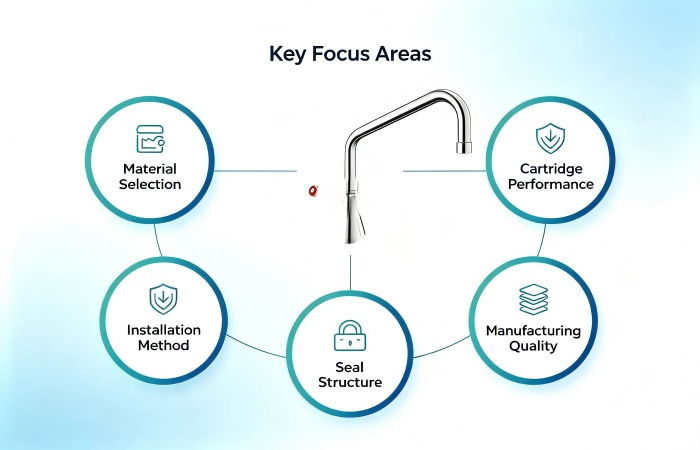
Material selection is important, but it is only one factor in determining the overall performance and service life of a commercial faucet.Before making a purchasing decision, buyers should also evaluate the following aspects:
No. | Key Consideration | Why It Matters |
1 | Material | Determines corrosion resistance, durability, and expected service life |
2 | Valve Cartridge Quality | Influences reliability under frequent daily operation |
3 | Sealing System | Helps prevent leaks and reduces maintenance requirements |
4 | Mounting Configuration | Should match the available workspace and installation conditions |
5 | Manufacturing Quality | Affects overall product reliability, consistency, and long-term performance |
A well-designed commercial manual faucet achieves dependable performance through the combination of quality materials, durable internal components, precision manufacturing, and thoughtful engineering.
Commercial manual faucets are expected to withstand intensive daily use, constant exposure to moisture, and frequent cleaning. As a result, the choice of material and the quality of internal components play a vital role in long-term performance.Brass remains a popular material thanks to its excellent machinability and attractive finish, making it suitable for applications where decorative appearance is a priority. However, because its long-term protection often depends on an electroplated finish, ongoing exposure to water, cleaning chemicals, and everyday wear may increase maintenance requirements over time.By contrast, Bestware stainless steel commercial manual faucets combine the natural corrosion resistance of stainless steel with dependable valve cartridge performance and robust structural design, making them well suited for demanding environments such as restaurants, hotel kitchens, central kitchens, and food processing facilities.
When selecting a commercial manual faucet, buyers should look beyond the initial purchase price and consider the product's long-term reliability, maintenance requirements, and overall lifecycle value. Choosing a faucet engineered for commercial applications can help improve operational efficiency while reducing maintenance costs over time.